

How to Choose a Web Design Agency: 5 Qualities That Separate Strategic Partners from Pixel-Pushers
This article cuts through the noise and gives you a clear framework for evaluating agencies based on what actually matters: business-first thinking, outcome-focused portfolios, structured processes, mobile-first and SEO-integrated execution, and genuine post-launch partnership. You’ll also get the specific red flags to watch for and the exact questions to ask before you sign anything.
Your website is your most active salesperson. It works around the clock, across every time zone, on every device. And with 62.69% of global web traffic now coming from mobile, the stakes for getting it right have never been higher.
So when you’re considering investing $50K to $200K in a new website, the fear is real: What if we spend all this money and nothing changes?
Most business owners carry three specific fears into every agency conversation. They worry the project will deliver a beautiful site with no business impact. They worry it will become a chaotic, months-long ordeal that drains their team. And they worry the agency will never truly understand what makes their business tick.
Those fears are valid. They’re also preventable. Here’s how to identify the agencies that deliver results, not just renders.
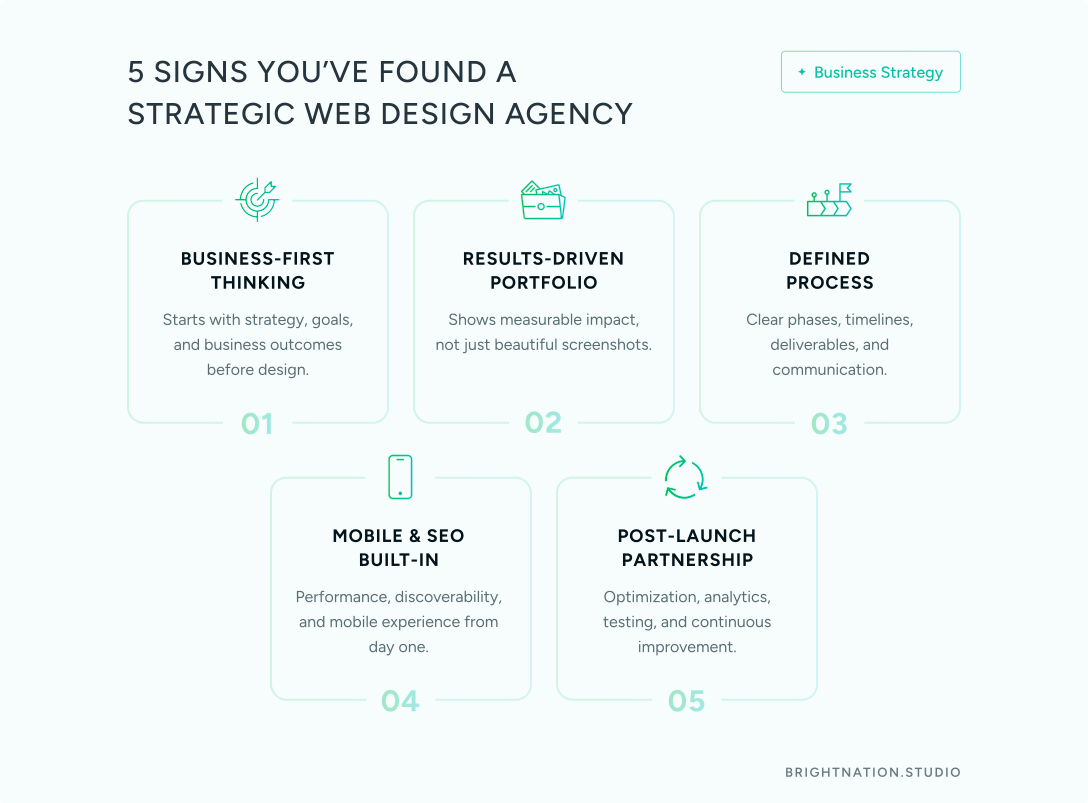
The 5 Non-Negotiable Qualities of a Results-Driven Web Design Agency
1. Business-First Thinking, Not Design-First
If an agency sends you mockups before asking a single question about your business model, walk away. That’s a design-first agency. They’re optimizing for their portfolio, not your growth.
A strategic agency starts with discovery. They want to know your revenue model, your ideal customer, your competitors, and what success actually looks like for you. Not just “a better website,” but specifically: more qualified leads? Higher average order value? Faster sales cycles?
The right agency will ask: “What defines success for you? Leads? Sales? Brand awareness?” If they skip that conversation and go straight to colors and layouts, they’re building something for themselves.
This directly addresses the fear that an agency won’t understand your business. The discovery phase is where understanding is built, and agencies that skip it are telling you exactly how the project will go.
2. A Portfolio Built on Business Outcomes, Not Just Beautiful Work
Every agency has a portfolio. The question is what their portfolio actually proves?
Pretty screenshots are easy to produce. Case studies with measurable results are not. When evaluating an agency, look for evidence of impact: traffic increases, conversion rate lifts, revenue growth tied directly to the work they did. Strategic design consistently outperforms template-based approaches on conversion, often by a significant margin, because it’s built around user behavior and business goals rather than visual trends.
Ask them directly: “Can you show me a project where you improved business results, not just aesthetics?” A confident agency will have that answer ready. A pixel-pusher will pivot back to how the site looks.
This is the clearest protection against investing in a site that generates no real business results.

Let’s get started! Contact us today to discover how we can help.
3. A Clear Process with Defined Milestones
Chaotic projects don’t come from nowhere. They come from agencies that never had a real process to begin with. A professional agency operates through defined phases:
Discovery — Strategy — Design — Development — QA — Launch.
Each phase has deliverables, approvals, and a clear handoff to the next.
Standard projects run 8 to 16 weeks.
Complex builds with custom integrations or large content libraries can run 3 to 6 months.
Either way, you should know the timeline before you sign anything.
Look for weekly check-ins, shared project boards, and documentation that keeps your team informed without requiring you to chase updates. Ask: “What’s your typical timeline? What could delay it? How do you handle scope changes?”
If the answers are vague, that vagueness will define your entire project experience.
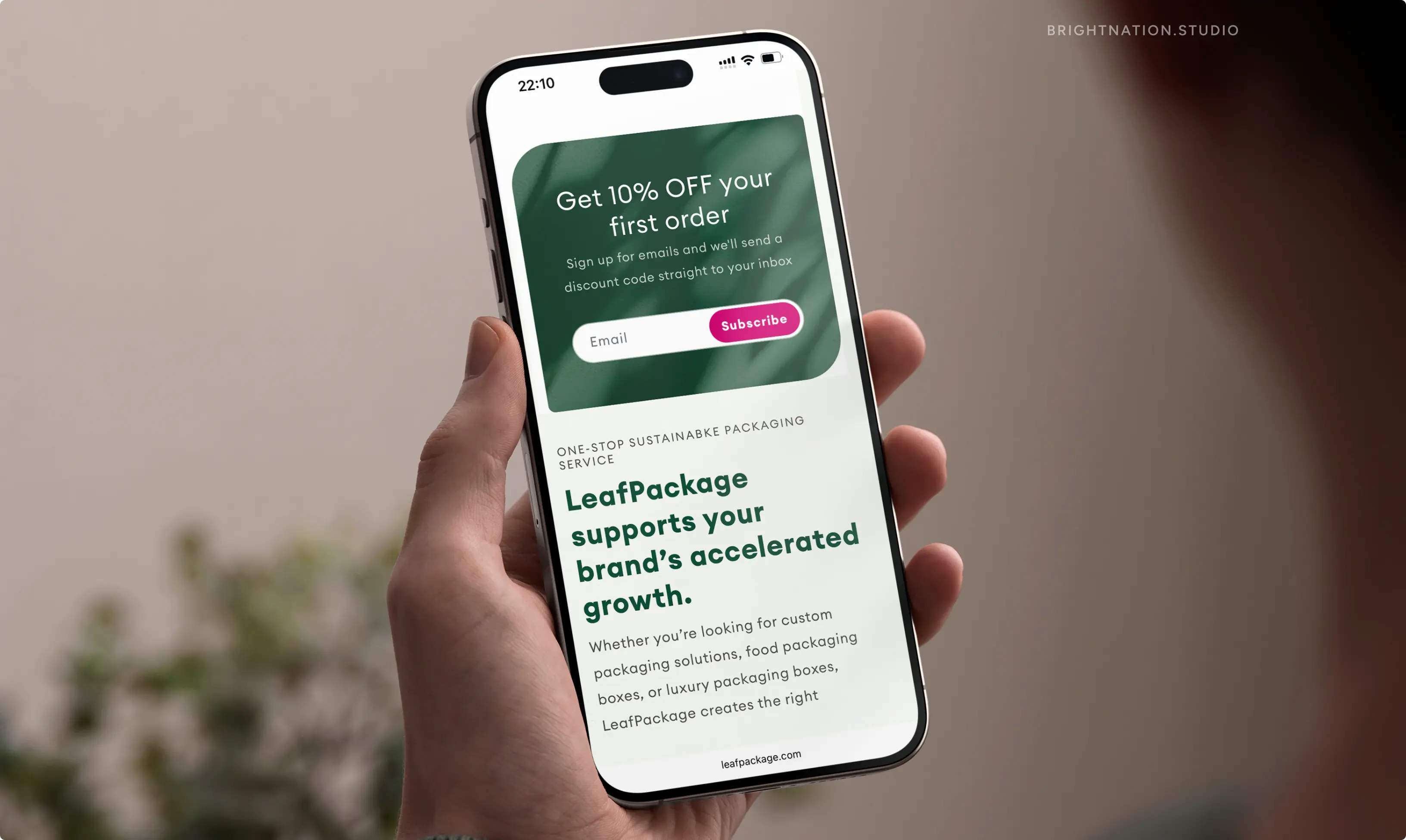
4. Mobile-First Design and SEO Built In from Day One
Mobile-responsive and mobile-first are not the same thing. Responsive means the desktop site shrinks to fit a phone. Mobile-first means the experience is designed for mobile users from the ground up, then scaled up to desktop.
With nearly two-thirds of web traffic coming from mobile devices, the distinction matters enormously for both user experience and search rankings.
SEO belongs in the strategy phase, not the post-launch checklist. Semantic HTML structure, clean code, page speed optimization, and Schema markup are all decisions made during development. An agency that treats SEO as an add-on is an agency that doesn’t understand how design and discoverability work together. They are one discipline.
A website is not a finished product the moment it goes live. It’s a starting point.
5. A Commitment to What Happens After Launch
A website does not become a finished product at launch. It becomes a foundation for growth.
The best agencies offer ongoing maintenance plans, A/B testing support, analytics tracking, and conversion optimization as the site accumulates real user data. Your highest-performing pages six months after launch may not be the ones anyone predicted at kickoff.
Ask: “What happens after launch? Do you provide ongoing optimization?” If the answer is essentially “we hand it over and you’re on your own,” you’re not getting a partner. You’re getting a transaction.
The Red Flags That Should Make You Walk Away
These aren’t minor concerns. Each one predicts a specific kind of pain.
 Vague pricing with no ranges. “It depends” is not a pricing strategy. It means surprises are coming.
No contract or Statement of Work. Professional agencies document everything. If they resist putting it in writing, that’s your answer.
One-size-fits-all packages. Your business has specific needs. An agency selling the same package to every client is not thinking about yours.
Guaranteed search rankings. No one can guarantee first-page placement. Anyone who says otherwise is either uninformed or dishonest.
No discovery phase. Jumping straight to design without learning your business is the fastest path to a site that looks good and performs poorly.
Slow or unclear communication. How an agency communicates during the sales process is exactly how they’ll communicate during your project.
Template-only execution. Generic themes produce generic results. If your site looks like everyone else’s, it will perform like everyone else’s.
These patterns don’t just predict a bad project. They predict wasted investment and months of stress.
The Questions to Ask Before You Hire
Use these as your evaluation framework. The quality of an agency’s answers will tell you everything.
“Can you show me a project where you improved business metrics, not just design?”
“What’s your discovery process? How do you learn about our business before designing anything?”
“What’s the realistic timeline, and what are the most common causes of delays?”
“How do you handle communication and project visibility throughout the engagement?”
“What happens after launch? Do you offer ongoing optimization and support?”
“How do you integrate SEO and mobile optimization into the design process, not after it?”
“How do you define and measure success for a project like ours?”
A strategic partner answers these questions with specifics. A pixel-pusher deflects back to aesthetics.
The best web agencies do not just deliver a website — they become partners in your growth.
Partnership Over Transaction
The best web design agencies don’t just deliver a website. They become invested in your growth. They ask about your business before they show you a single design. They provide clear timelines, transparent communication, and defined processes that keep your team informed and in control.
They measure success by your business outcomes, not by how the finished site looks in their portfolio.
Your website is a business tool. Choose an agency that treats it like one.
At Bright Nation Studio, every engagement starts with understanding your business, your audience, and your goals before a single pixel is placed. If you’re evaluating agencies and want a strategic conversation, not a sales pitch, let’s talk.