

Essential Website Tools for 2026: Automation, Speed, and Empathy
The best websites in 2026 aren’t built on hype — they’re built on three pillars: Automation, Speed, and Empathy.
2025 was the year AI tools went mainstream. Every business had access to them. Most didn’t know what to do with them.
2026 is different. The question is no longer “which AI tools exist?” It’s “which tools bring real value to my business?” The gap between brands with a website and brands with a performing digital asset is widening fast. The ones pulling ahead are using a focused, integrated stack built on three pillars: Automation, Speed, and Empathy.
Pillar 1: Automation — Work Smarter at Every Layer
Automation isn’t about replacing your team. It’s about eliminating the tasks that slow them down so they can focus on strategy.
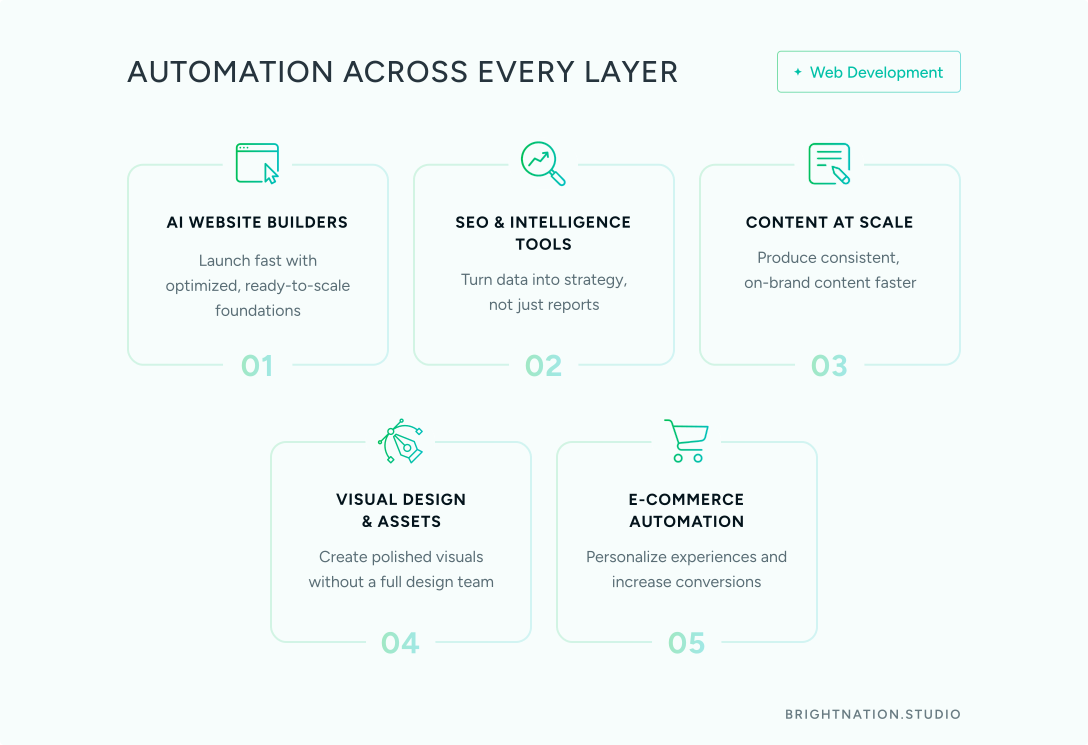
AI Website Builders
For businesses that need a fast, optimized foundation, 10Web AI Builder remains one of the strongest options for WordPress. It handles performance optimization as part of the build, not as an afterthought. Wix ADI has matured into a solid tool for personalized design at speed. Squarespace AI Studio suits brands that prioritize visual polish and want a streamlined editing experience.
Use these when: You need to launch quickly, test a new market, or build landing pages without a full development cycle.
SEO Tools That Think Ahead
Surfer SEO connects content structure directly to ranking signals, making it practical for teams producing content at volume. Ahrefs remains the benchmark for keyword research and competitive analysis. SEMRush AI Assistant has added enough intelligence to its recommendations that it now functions as a genuine strategic input, not just a reporting dashboard.
Content Creation at Scale
ChatGPT API allows businesses to build custom assistants tailored to their brand voice, workflows, and audience. Jasper AI is purpose-built for marketing copy and handles brand-specific tone better than general-purpose models.
Use these when: You’re scaling blog output, building email sequences, or maintaining consistent messaging across a large site.
Visual Design and Assets
This is where many businesses still waste time searching for visuals that are “good enough.” Freepik has become one of the most capable platforms in this space, combining AI-generated image creation with an extensive library of professional templates and mockups. You can generate on-brand visuals, access ready-to-use design assets, and produce polished mockups without a full design team. For businesses that need to move fast and look credible, Freepik closes the gap between “we need visuals” and “we have visuals that convert.”
Canva Pro AI handles quick social and marketing visuals well. Adobe Express suits teams with more advanced design needs who want automation built into a professional workflow. For photography-based content, Unsplash and Pexels still offer reliable, high-quality stock at no cost.
E-Commerce Automation
Shopify AI now personalizes product recommendations and on-site experiences at a level that used to require custom development. Klaviyo AI has become a standard for email automation in e-commerce, with behavioral triggers that respond to how individual customers actually shop.
Use these when: You’re personalizing at scale, running abandoned cart flows, or trying to increase average order value without adding headcount.
Pillar 2: Speed — Performance Is a Revenue Decision
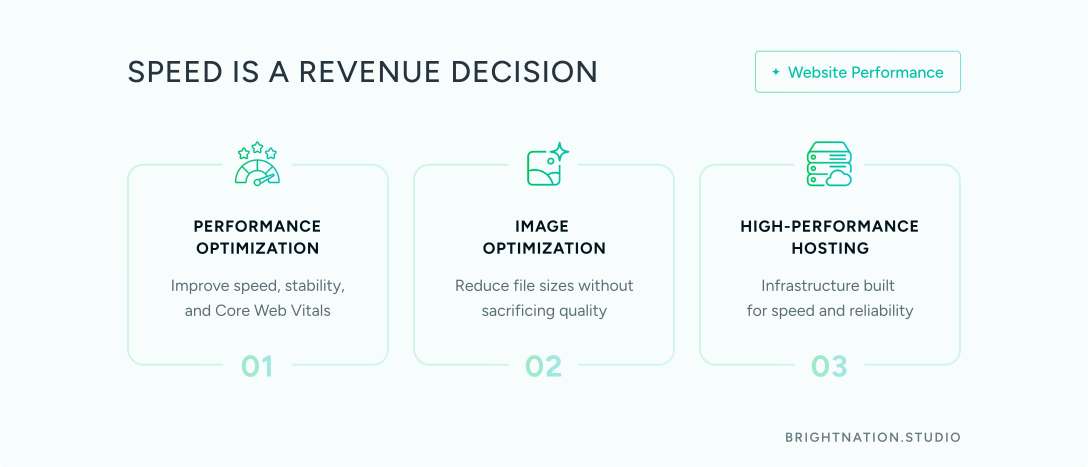
A one-second delay in page load time can reduce conversions by up to 7%. On mobile, the impact is sharper. Google’s Core Web Vitals are now a confirmed ranking signal, which means slow sites pay twice: once in lost conversions, and again in lost organic traffic.
Performance Optimization
NitroPack is one of the most complete solutions for speed optimization without requiring developer intervention. It handles caching, minification, and image delivery in a single layer. Cloudflare Pages provides CDN infrastructure and real-time monitoring that protects performance globally. Google Lighthouse should be part of any site audit process — it gives you a clear, actionable score across performance, accessibility, and SEO.
Image Optimization
Images are consistently the largest performance bottleneck on most sites. TinyPNG compresses files without visible quality loss. Converting images to WebP format reduces file size significantly compared to JPEG or PNG. Pair these with lazy loading plugins so images only load when they enter the viewport.
Hosting That Doesn’t Throttle You
Hosting is infrastructure, and infrastructure decisions compound over time. WP Engine and Kinsta are the two strongest managed WordPress hosts, both built for performance and reliability at scale. For teams building on modern frameworks like Next.js or Astro, Vercel offers deployment infrastructure that’s fast by design.
Use these when: You’re seeing high bounce rates, failing Core Web Vitals, or mobile performance scores below 70.
Pillar 3: Empathy — Understanding What Your Users Actually Do
Data without context is noise. The Empathy pillar is about understanding user behavior well enough to make decisions that improve real outcomes.
UX Optimization
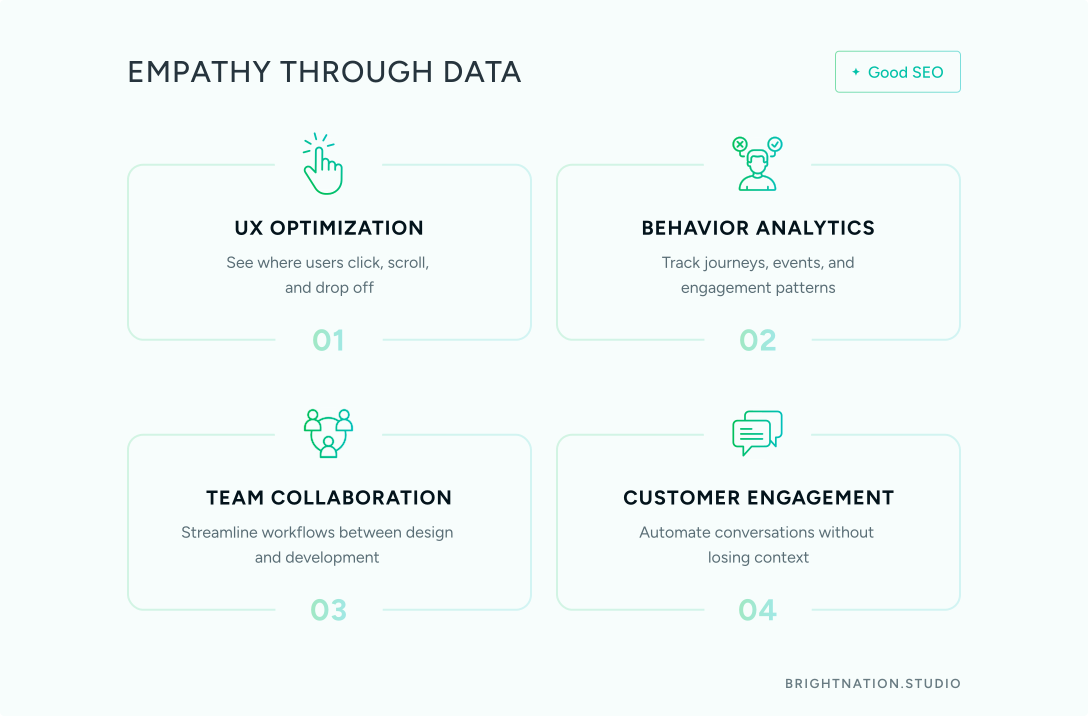
Hotjar Heatmaps 2.0 shows you exactly where users click, scroll, and stop engaging. One mid-sized SaaS brand used Hotjar data to identify that 68% of users were abandoning a pricing page before reaching the CTA. A single layout change based on that insight increased trial sign-ups by 34%. That’s the kind of decision that doesn’t come from gut instinct — it comes from watching real behavior.
Crazy Egg adds predictive analytics to heatmap data, helping teams prioritize which changes to make first. Maze is built for structured user testing, useful when you want direct feedback on new features or redesigns before committing to a full build.
Analytics That Go Deeper
GA4 Enhanced now tracks cross-device journeys in a way that reflects how people actually browse. Mixpanel is the right tool when you need interaction-level reporting, particularly for SaaS products and apps. Heap automates event tracking so you capture user behavior retroactively, without having to set up every event manually in advance.
Collaboration Tools
Figma with AI plugins has become the design collaboration standard. It shortens the feedback loop between design and development significantly. Notion AI works well for content planning and documentation. Monday.com AI handles project management for teams running multiple campaigns or site updates simultaneously.
Customer Engagement
Tidio AI handles chatbot conversations with enough intelligence to qualify leads and answer product questions without human intervention. Intercom AI goes further, combining support automation with targeted marketing messages based on user behavior.
Use these when: You’re trying to understand drop-off points, improve conversion funnels, or reduce the time your team spends on repetitive customer interactions.
The Right Tool for the Right Job
The brands winning in 2026 aren’t running 40-tool stacks. They’re running tight, integrated stacks where each tool feeds into the next.
Start with 5 to 7 core tools across the three pillars. Get them working together. Measure the impact. Then expand based on what you actually need, not what’s trending.
Automation handles the volume. Speed handles the first impression. Empathy handles the conversion. All three working together is what turns a website into a business asset.