

Brand Style Guide 2026: The Visual and Non-Visual Framework That Builds Trust
A brand without guidelines is a brand that looks different every time a customer sees it. Inconsistency reads as unprofessional, confusing, and untrustworthy. From logo systems and color palettes to voice, tone, and customer service standards, here is the practical framework that makes your brand recognizable, efficient, and ready to scale in 2026 and beyond.
The Cost of Brand Confusion
If your logo looks one way on your website, a different way on your packaging, and your social media reads like it was written by a completely different company, you have a brand consistency problem. And it is costing you.
Every time your brand looks or sounds different, customers have to re-learn who you are. That cognitive friction chips away at trust. Research from Lucidpress found that consistent brand presentation across all platforms can increase revenue by up to 23%. The inverse is equally true: inconsistency signals disorganization, and disorganization signals risk.
The insight most businesses miss is that consistency is not about rigidity. It is about recognition. A strong brand style guide does not limit creativity. It channels it. It gives every designer, marketer, developer, and customer service rep a shared language, so your brand shows up as one coherent entity no matter where a customer encounters it.
The Two Sides of Brand Guidelines
Side 1: Visual Guidelines (How You Look)
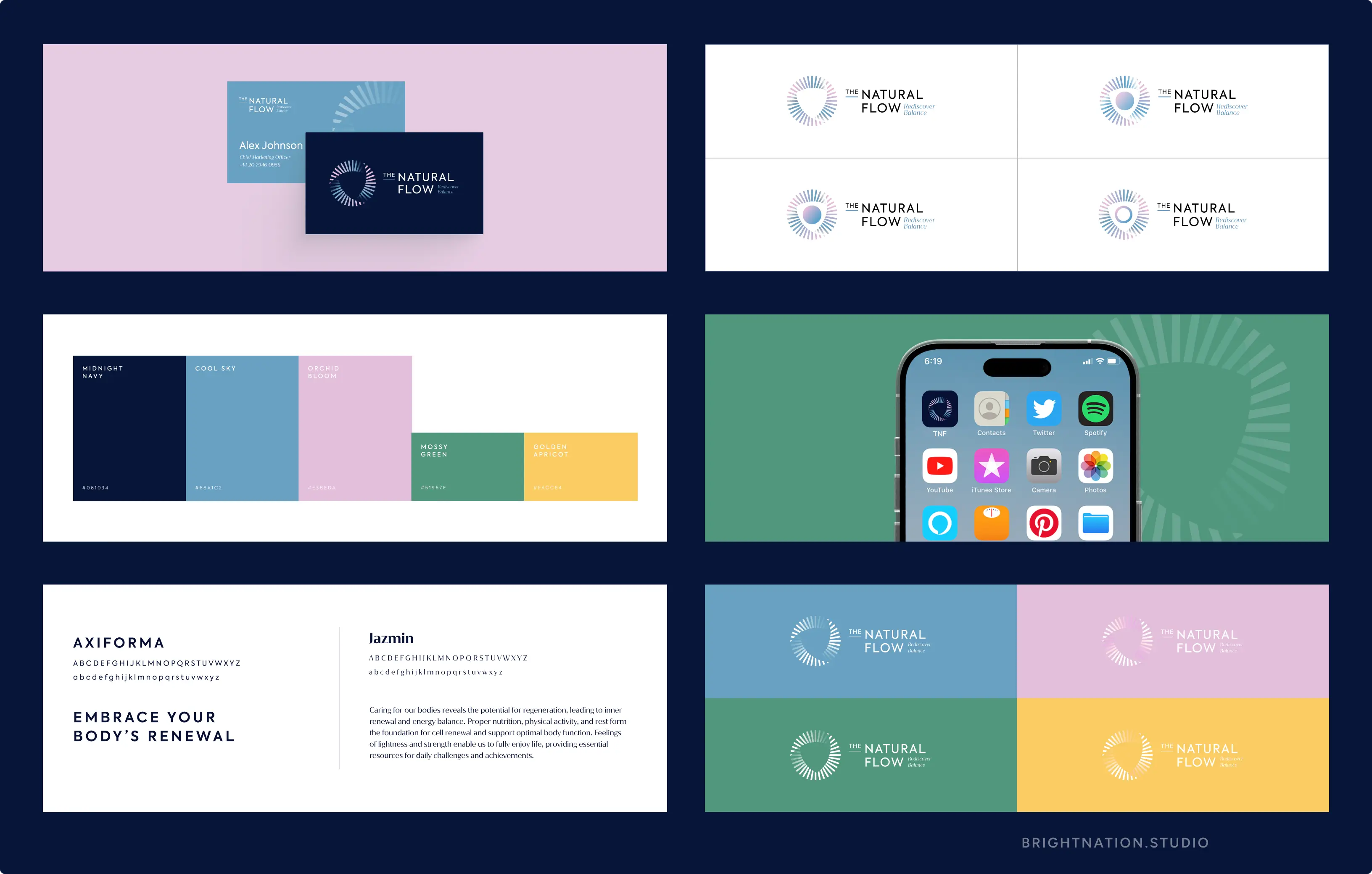
Logo system. Your logo is not one asset. It is a system. Primary, secondary, and monochrome variations each serve a purpose, and clear usage rules prevent misapplication. TripAdvisor is a strong example here. Their iconic green bubble rating system is maintained at what the brand team describes as “atom-level detail” globally, ensuring it reads identically whether it appears on a mobile app, a billboard, or a partner website. That level of precision is not obsessive. It is strategic.
Color palette. Primary, accent, and neutral colors should be documented with exact hex codes, not approximations. Color carries emotional weight. Wealth, the financial services brand, uses vibrant green and yellow to humanize an industry that traditionally communicates in cold blues and grays. That choice is intentional, and it works because it is applied consistently across every touchpoint.
Imagery style. Stock or custom? People-focused or product-only? Bright, editorial photography or muted, documentary-style imagery? These decisions shape perception. Document them so every piece of visual content feels like it belongs to the same world.
Layout and white space. Breathing room is not wasted space. Strategic use of white space guides attention, reduces cognitive load, and signals confidence. A cluttered layout suggests a brand that does not know what it wants to say.
Visual guidelines are the most visible layer of your brand system.
Side 2: Non-Visual Guidelines (How You Sound and Feel)
This is where most brand guides fall short. Companies spend weeks perfecting their logo and then write their website copy in whatever voice feels right that day. The result is a brand that looks polished but feels inconsistent.
Mission and values. These are the foundation everything else is built on. The “I Love New York” brand is a useful reference point. That logo is not just a graphic. It is a consistent mission printed on millions of pieces of merchandise, carried across decades, and recognized globally. The visual works because the mission underneath it is clear and unwavering.
Voice and tone. Are you quirky or authoritative? Warm or precise? Casual or formal? Your brand style guide should define this explicitly, with examples. Not just adjectives, but actual copy samples that show what your voice sounds like in practice, and what it does not sound like.
Messaging framework. Key messages, value propositions, and taglines should be documented and consistent. When your sales team, your social media manager, and your email copywriter are all pulling from the same messaging framework, the brand experience compounds.
Customer service standards. How your team interacts with customers is brand expression. Internal protocols that define response tone, escalation language, and communication standards are as much a part of your brand guidelines as your color palette. Non-visual consistency builds trust just as powerfully as visual consistency does.

Let’s get started! Contact us today to discover how we can help.
Why Brand Guidelines Matter: The Business Case
This is not a creative exercise. It is a business decision with measurable returns.
Professionalism. Consistency signals attention to detail. Customers read it as a proxy for quality. According to the same Lucidpress data, 68% of businesses report that brand consistency has contributed directly to revenue growth of 10% or more. The signal is clear.\
Efficiency. A well-built brand style guide eliminates the “what color should this be?” conversations that slow teams down. Designers, marketers, and developers work faster when the decisions have already been made. Creative energy gets redirected from problem-solving to execution.
Scalability. New team members onboard faster when the brand system is documented. Agencies and partners can execute without constant oversight. As your business grows, your brand does not fragment, it scales.
Adaptability. A common misconception is that brand guidelines lock you in. The opposite is true. A strong guide gives you the confidence to evolve, because you know which elements are fixed and which can flex. Your guidelines are a living document, reviewed annually and updated as the market shifts, but always anchored to your core identity.
Recognition. When your TV spot, your social content, your packaging, and your website all feel like the same brand, customers recognize you instantly. That recognition is not accidental. It is the return on investment from a well-maintained brand system.
How to Build Your Brand Guidelines (Start Here)
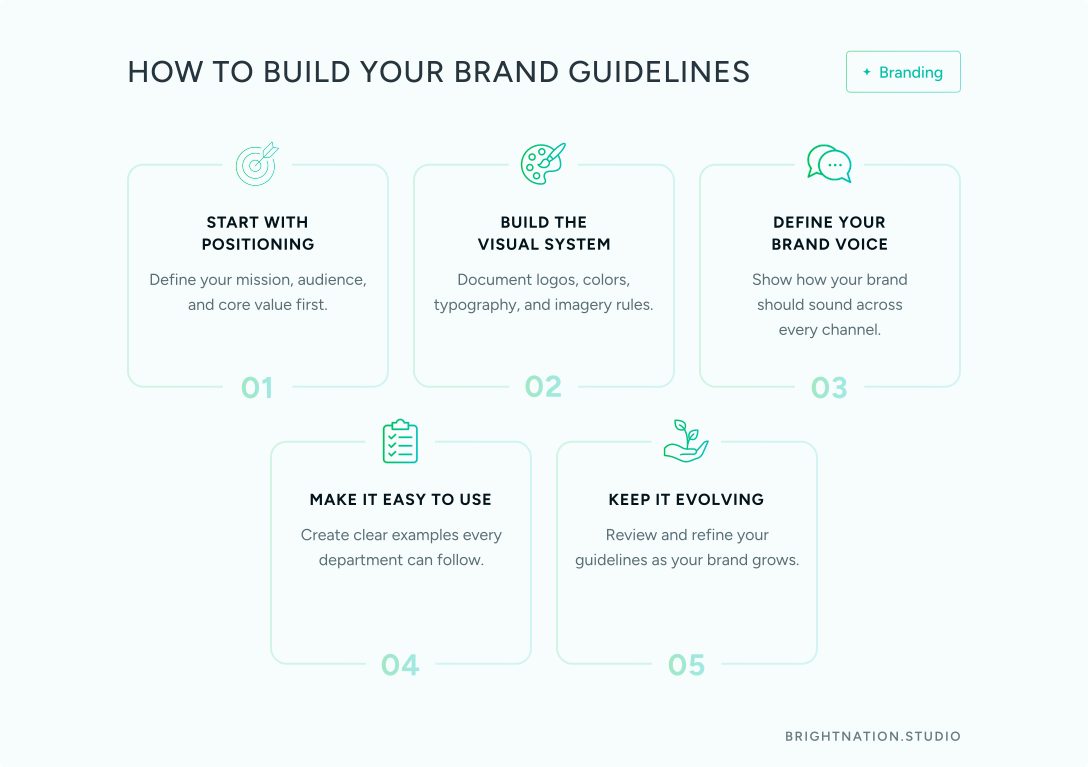
The most common mistake is starting with visuals. Start with strategy!
- Define your positioning first. Before a single color is chosen, answer the foundational questions. What is your mission? What do you stand for? Write a one-sentence value proposition that is specific enough to be useful. Vague positioning produces vague brands.
- Document the visual system. Once your strategy is clear, build the visual layer: logo variations with usage rules, color palette with hex codes, typography hierarchy, and imagery direction. Each element should connect back to your positioning, not exist for aesthetic reasons alone.
- Define the voice in writing. Do not just list adjectives. Write example copy. Show what your brand sounds like in a product description, a customer service response, and a social caption. Then show what it does not sound like. The contrast is often more instructive than the examples themselves.
- Make it accessible to every department. A brand guide that only designers can read is a brand guide that will not be followed. Design it for your whole organization. Use clear do’s and don’ts with visual examples. Keep the language simple. If your customer service team cannot use it, it is not doing its job.
- Treat it as a living document. Schedule an annual review. As your market evolves, your guidelines should evolve with it. The goal is not to freeze your brand in time. It is to ensure that growth never comes at the cost of coherence.
Consistency Is a Competitive Advantage
In a crowded market, recognition is currency. When customers see your brand and instantly know it is you, across every channel, every touchpoint, every interaction, you have built something genuinely valuable.
Brand guidelines are not creative constraints. They are the framework that makes everything you build stronger, faster, and more recognizable. The brands that win long-term are not necessarily the ones with the most original ideas. They are the ones that show up the same way, every time.
If your brand does not have a style guide yet, now is the right time to build one. Start with your strategy, document your visual system, define your voice, and give your whole team the tools to represent your brand with confidence.
At Bright Nation, we help businesses build brand systems that scale. If you are ready to bring consistency and clarity to your brand, let’s talk!